Saturday, June 15, 2013

NHS : MORE PRIVATISATION

EXTRACT FROM THE BRITISH MEDICAL JOURNAL

"A forthcoming trade treaty between Europe and the United States could have far-reaching implications for the NHS. Some observers believe the Health and Social Care Act was designed with this deal in mind. Will it add a new dimension to competition in the health service? Peter Davies reports.
The European Union and the United States are about to agree terms for negotiating a free trade treaty. Prime minister David Cameron has made reaching agreement a priority for the meeting of the G8 countries on 17-18 June, which he is chairing. It is hoped the treaty will be signed by the end of 2014. The European Commission says it will be “the biggest bilateral trade deal ever negotiated,”1 adding £73bn (€85bn; $110bn) a year to the EU’s economy.
Officially titled the transatlantic trade and investment partnership (TTIP), this is the latest in a series of agreements to “liberalise” trade between wealthy nations. The EU has been negotiating a similar deal with Canada, the comprehensive economic and trade agreement (CETA), since 2009. These agreements focus on “harmonising” regulation and opening up markets: often this involves privatising public services. Though governments negotiate the agreements, they are designed to benefit large transnational corporations and protect foreign investors.
Cameron said of the TTIP talks: “Too often in trade, the voices defending special interests shout loudest. But it makes no sense to exclude vital parts of the economy. Everything is on the table with no exception. ”.
Some health policy analysts have deduced that the NHS will be one of the markets the government opens to US interest. Since the Health and Social Care Act 2012 it has been primed to make ever more use of competition, in England at least. The result could be many more NHS services contracted out to private providers...."

FOR SOURCE  SEE HERE.

Monday, January 14, 2013

The ILP At Dronfield

ILP@120: Lessons from History

Jan 14th, 2013 | By willb | Category: Articles, Frontpage, News
 
WILL BROWN reports from the Dronfield Labour Discussion Group where more than 30 activists braved a wintery night to mark the ILP’s 120th birthday on Sunday 13 January.
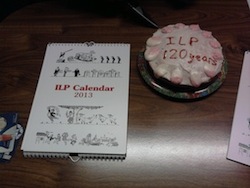
  120 cake
Fuelled by a special surprise birthday cake made by Christine and Rosie Smith (pictured left), the audience heard the ILP NAC’s Barry Winter assess the contemporary lessons to be learned from the ILP’s history.

Barry began by reminding the audience just what a huge task the founders of the ILP faced. Hostility from the trade unions, from the Liberals and from much of the working class, meant that founding a party for labour – ‘a party that will’ – was a project that had to be argued for and fought for.

Even the later creation of the Labour Party necessitated compromises that many were unhappy with as the ILP’s commitment to socialism was tempered by the reformism and electoral priorities of others. Looking to achieve what is best under the constraints of the day, while never giving up on the longer-term aims we seek to achieve, has often been a hallmark of the ILP’s politics, Barry noted.

Looking to the present day, Barry focused on the interconnections between the necessary role of social democratic electoral parties, left groups like the ILP, and wider movements for change. While parties inevitably become focussed on short-term manoeuvring between tight electoral constraints, social movements can be more open and creative, he said. Although often short-lived, at their best movements create political space that social democratic parties can occupy.

In its history the ILP has played both roles, creating space and changing political landscapes while also engaging in electoral politics. Finding new ways for dialogue and cooperation between these two areas of political activity remains one of the most important challenges we face.
—-
Many thanks to Christine and Rosie Smith for the cake and the photo.

More articles on the ILP’s 120th anniversary can be found here.

More on the ILP’s history is here.
Buy ILP 120th anniversary calendars here.

Tags: , ,

Thursday, January 3, 2013

The ILP Reaches 120 at Dronfield

The ILP Reaches 120


This year marks the 120th anniversary of the ILP, a milestone in British political history which the current ILP aims to mark and celebrate over the next 12 months in a number of ways. Starting with our own Discussion Meeting as shown in our right-hand column.

The Independent Labour Party was founded on 13 January 1893 when some 120 delegates gathered at the Labour Institute in Bradford to create a national political party to represent working class people and strive towards a socialist society.
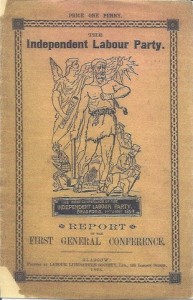
1893 conf rep
As well as some known figures, such as the chair, Keir Hardie – already an Independent Labour MP – most of the delegates were young, working class men and women, mainly from the industrial north of England and Scotland, who had been active in local ILPs, trade unions and trades councils.

They were pioneers, idealists in some ways, who knew they lived in an environment hostile to socialist ideas, yet believed it was possible to change people’s outlooks, to alter the political culture, and to create a fairer, more equal, more democratic world.

The organisation they created has remained in continuous existence ever since, surviving numerous ups and downs in political fortune, and living through many changed and challenging circumstances over the last 12 decades.

Now known as Independent Labour Publications. the ILP has a(slightly) different name, and it operates in vastly transformed political circumstances, yet in many ways the ILP today continues to embody the spirit and purpose of its founders.

Like them, it advocates an ‘ethical’ socialism, one based on essential humanitarian concerns. Like them, it has stated in Our Politics in 2011, “we hold fast to the ethics and principles relating to care and compassion, fellowship and fraternity, mutuality and cooperation, social, political and economic equity, and democracy”.

These have been the foundation of the ILP's politics for 120 years.

Throughout 2013, it aims to celebrate the birth and history of the ILP, to remember the people who made it and gave their lives to it, and to mark the survival of those political ideas by discussing their relevance and importance today.

Here are some of the events and activities the ILP hope to be involved in, either as authors and organisers, or as participants. They hope that you will be involved too.


13 January: The 120th anniversary of the founding conference of the ILP

From 13 January: Online profiles of ILPers
The start of a series of profiles of figures from ILP history, some well known, others unheralded, written by academics, historians, activists and politicians. The series will begin with Fred Jowett, profiled by Ian Bullock, and continue on the ILP website throughout the year.
13 January: Lessons of ILP history
Barry Winter, former ILP general secretary and author of The ILP: Past & Present, speaking to Dronfield Labour Party Discussion Group on what today’s Labour movement can learn from ILP history. More details here.

2 March: ‘George Orwell: Homage to Catalonia 75 Years On’
An International Brigades Memorial Trust conference at Manchester Conference Centre focusing on George Orwell’s account of the Spanish Civil war and the contribution of the ILP volunteers. The ILP will have a stall. More details here.
May: The ILP School
The ILP’s annual conference event will focus on its 120th anniversary with the theme of ‘Ethical Socialism: Past and Present’. Details of date, time, length and venue are still to be confirmed.
May: Book launch – The ILP: Past & Present
Launch of a brand new edition of Barry Winter’s always popular pamphlet on the history of the ILP. Last updated 20 years ago on the ILP’s centenary, this is a newly re-written and re-published version. More details to come.
(Note: the 1993 version of The ILP: Past & Present can be read here.)
September: The ILP at Labour Party conference
Look out for ILP fringe meetings, including one on ethical socialism with MP Jon Cruddas, the man leading Labour’s policy review. Dates and details to be announced.
Also, keep your eyes open for events at Clarion House in Nelson (probably in the summer), and at the Working Class Movement Library in Salford, hopefully in the autumn.
And don’t forget the limited edition 2013 ILP Wall Calendars, especially published to mark the ILP’s 120th anniversary, and illustrated by political cartoons from the 1890s and 1920s. Some still available. Order yours here.


Hat Tip - Matthew Brown

Monday, December 24, 2012

Socialist Greetings

Click on to the card to enlarge it.

Friday, December 7, 2012

Get Your Socialist New Year Calendar

 The Following Is Taken from the ILP's Web-Site. I Have Just Ordered My Copy.


Cartoon Calendars to Mark ILP’s 120th Anniversary

Nov 19th, 2012 | By Matthew Brown | Category: Articles, Frontpage, News
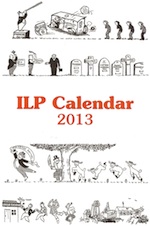
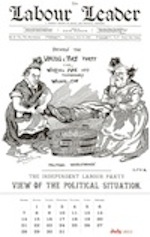
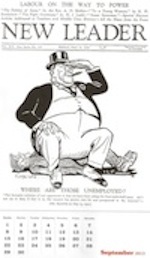
Iconic political cartoons from the 1890s and 1920s are featured in a new wall calendar published by the ILP to mark our 120th anniversary next year. ILP Calendar cover

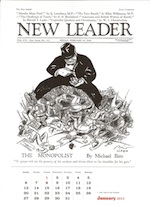
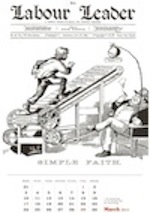
Launched to celebrate the founding of the Independent Labour Party in Bradford in 1893, the A4 calendars are illustrated by biting socialist cartoons first published in Keir Hardie’s newspaper, Labour Leader, in the 1890s and its ILP successor, New Leader, in the 1920s. They are not only a poignant reminder of our past but retain significant political relevance today.
The founding conference of the ILP on 13 January brought together local ILPs which had already been established, particularly in the north of England, plus the Scottish Labour Party and many individuals eager to promote its cause. The ILP became Independent Labour Publications in 1975.
The ILP 1893-2013 wall calendars cost £9.00, including postage and packing, from Independent Labour Publications, PO Box 222, Leeds LS11 1DF. Cheques payable to ‘ILP Trust Ltd’.
To buy a calendar by PayPal, click here.
For more information email: info@independentlabour.org.ukILP Calendar Jan
—-
To read more about the ILP’s history visit our History section here.
To mark the anniversary, the ILP will also be publishing an updated version of The ILP: Past & Present in the new year while this website will feature a series of biographical articles on significant ILPers from Labour history.
More details of 120th anniversary publications and events will be published here in due course.
ILP Calendar FebILP Calendar MarILP Calendar JulILP Calendar Sep                   

Thursday, November 15, 2012

Clay Cross - 90 Continuous Years With Labour


It is a 90th Anniversary. Since 15 November 1922, Clay Cross has been represented in parliament by only Labour MPs. Since 1950, it has been part of the North East Derbyshire Constituency and the MPs (in turn) have been Henry White, Tom Swain, Ray Ellis, myself and currently Natascha Engel. Yet prior to the 1950 General Election, Clay Cross was part of the Constituency which bore its name. Below I give a synopsis of that Constituency's Labour Parliamentary History.

 The Clay Cross Parliamentary Constituency operated from 1918 until the time of the 1950 General Election. It covered much of what are currently the southern areas of both the North East Derbyshire and Bolsover Constituencies. In those days it was an area in which coal mining abounded.

Yet although the Constituency was dominated by the miners’ vote and the Derbyshire Miners' Association (DMA) was a powerful influence in the area, out of the six different Labour candidates it ran for parliament at various elections, only two of these were miners. The absence of miners as Labour candidates in parliamentary contests in 1922, 1923, 1924, 1929, 1931, 1933. 1935 and 1936 (when four different Labour candidates ran) showed an independence of mind amongst local miners from the pressures of the leadership of the DMA. This was aided by the influences of a socialist-inclined local Methodism and by left-wing activists in the Independent Labour Party (ILP) in areas such as Bolsover. The ILP, however, went on to disaffiliate from the Labour Party in 1932. A further factor leading to the period in which miners' were not run as candidates, is that Clay Cross became one of the safest Labour seats in the country. It, therefore, attracted the interest of leading figures at national level in the Labour Party.

The first election in the Clay Cross Constituency in 1918 followed a conventional pattern for an area dominated by the DMA. . Fred Hall, the Labour candidate was a leading official of the DMA, who eventually served for 29 years on the national executive committee of its parent body, the Miners' Federation of Great Britain. He was, however, the only Labour candidate for the Clay Cross Constituency who ever failed to win the seat. He lost by 1,221 to a Liberal who had Conservative backing. For the Conservatives and Liberals who had been the larger elements of the 1915-18 War-time Coalition, had joined into a deal aimed at not running candidates against each other. 

When Fred Hall dropped out of standing for the seat just prior to the 1922 General Election, Charlie Duncan was selected in his place. He had helped to found the Workers’ Union who had been involved in the birth of the Labour Party and represented unskilled workers. He had been the Labour MP for Barrow-in-Furness from 1906 to 1918 and had spells as both Whip and Secretary for the Parliamentary Labour Party. He won the elections in Clay Cross in 1922, 1923, 1924, 1929 and 1931. His final success revealed how Labour had built up the seat. The 1931 election was held following the collapse of the minority Labour Government in the middle of a major financial crisis, with Ramsay MacDonald its leader defecting to run a National Government. Labour’s position at the subsequent General Election collapsed from 288 to 52 seats, yet Labour held Clay Cross by almost 10,000 votes. A massive Labour majority in the adverse circumstances of the time. 

When Charlie Duncan died in 1933, Clay Cross adopted Arthur Henderson as their candidate. Known as “Uncle Arthur” he was a huge figure in the early history of the Labour Party. He was leader of the Labour Party from 1908 to 1910 (with another spell at the start of the First World War). He served as Labour’s first Cabinet Minister in the First World War Coalition Government from 1915 to 1917, resigning when his idea for an international conference on the war was voted down by the rest of the cabinet. He helped shape the pre-Blairite structure of the Labour Party as its General Secretary, a post he held from 1912 to 1935. He was Home Secretary in the first Minority Labour Government of 1924 and Foreign Secretary from 1929-31. When MacDonald defected Henderson took over as Labour's temporary leader until 1932, but gave up the position because he had by then lost his parliamentary seat. Clay Cross provided his avenue back into Labour’s parliamentary politics. In the by-election one of his opponents was Harry Pollitt the General Secretary of the Communist Party who lost his deposit with 10.8% of the votes to Henderson’s 69.3%. So there was a total left-wing vote of over 80%. Whilst he was MP for Clay Cross, Henderson went on to receive the Nobel Peace Prize and was held in high regard, it being claimed that “no-one ever sought his help in vain"*. He died in 1935.

At the subsequent General election, Clay Cross ran the 35 year old Alfred Holland who was a local Methodist. But within 10 months he was stricken with spinal meningitis and died shortly afterwards.

A by-election in 1936 led to the Clay Cross Labour Party running its fourth candidate in five years. George Ridley had been on the Executive of the Railway Clerk’s Association since 1909. He was seen as “becoming the Labour Party’s leading pamphleteer*”. In 1944 he also died whilst still an MP.

After 26 years, Clay Cross once more adopted a Derbyshire Miners’ Candidate in Harold Neal the area’s Vice President, who went on to become Secretary of the Miners’ group of MPs in parliament. There was a war-time pact amongst Churchill’s Coalition partners at the time, which covered the Labour Party. This amounted to a deal not to run candidates against coalition partners in by-elections. So only two independent candidates stood against Neal. One ran as a “Workers Anti-Fascist” and the other as an “Independent Progressive”. Neal got 76.3% of the votes. When the war ended, he improved his position by taking 82.1% of the votes in opposition to a Conservative.

When the boundaries were redrawn and the Clay Cross seat was absorbed into other areas, Harold Neal became the Labour MP for Bolsover. He had a period as Parliamentary Secretary to the Minister of Fuel and Power in 1951 and retired as MP in 1970 to be replaced by Dennis Skinner who was the Chair of NE Derbyshire Labour Party, President of the DMA and also an active member of the Clay Cross Labour Party.

A souvenir brochure published by the Clay Cross Divisional Labour Party in 1948 pointed out Labour’s dominance in the area, stating that there were “46 Local Government Seats (exclusive of Parish Councils) within the Constituency : of these 40 are held by Labour members. In addition, there are 16 Parish Councils : in the majority of cases we have 100 per cent representation”*. ( * = The two earlier quotations are also taken from this souvenir brochure.)

Those were the days.

Friday, October 26, 2012

From Today's Guardian : Letter To The Editor


Fallout from the Scottish referendum


One of the strongest arguments for giving the vote to 16-year-olds, as proposed in Scotland (Editorial, 22 October), is that it is an essential step towards tackling voter under-registration. The Electoral Commission has reported that at least 6 million people are missing from electoral registers. Yet now we see that the under-registration figure is likely to be larger than this, as census details have just been revealed which show that 1.57 million people in England and Wales have second addresses and this will entitle many of them to double registration. If, say, 1 million throughout the UK have done this, that means that under-registration is then over the 7 million mark.With votes at 16, the names of "attainers" would be included on registers when they were 15, showing the dates of their coming birthdays and their then entitlement to vote. If registration for these first-time voters took place via their schools, an initial registration of almost 100% could be achieved. A proactive registration system could then be put in place to ensure that most of those who initially registered did not later in life slip through the net.

As under-registration is high among the 18-25 age group, the poor, the rootless and ethnic minorities, this leads to a situation where the boundaries of parliamentary constituencies are seriously distorted. A system of initial registration via schools, with an associated and imaginative educational programme, could start to correct this imbalance and develop a commitment among young people to use and improve the democratic process. Or are we going to leave it all to Alex Salmond?

Harry Barnes
Dronfield, Derbyshire